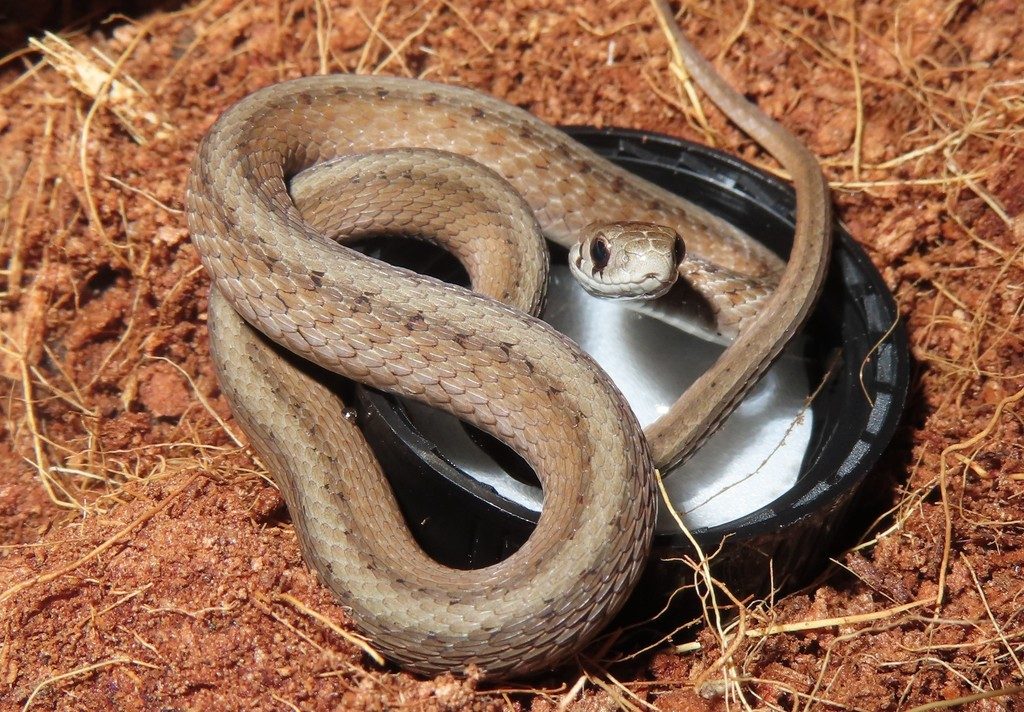
Setup
The numbers
Temperature
The warm side, 32°C. This sheet states the warm side only. It gives no cool side, so the other end of the gradient is not in our data. Same scale on every sheet here, so two species compare by eye.
The sheet stateswarm 32 °C
Humidity
The sheet statesAn average humidity of 40%, then 60-65% when starting to shed
Enclosure and conditions
What your climate adds
This sheet states a range to hold. Your local climate decides how much work holding it is. Pick the nearest city: nothing is sent anywhere, the choice stays in this browser.
What it needs
Every line above is deduced from a value this sheet states, and names which one. Nothing here is a general recommendation. What the sheet does not state is listed too, rather than left out: a kit that looks complete is worse than one that names its gap.
Food
Diet
Feeding rhythm
Twenty-eight days, one row. Each band is a meal window.
Why
The windows widen as they go because the interval is a range: four meals after a 10–14 day cycle land anywhere between day 40 and day 56.
The sheet statescomposting worms, beetle grubs, slugs, caterpillars, crickets and other soft-bodied invertebrates; several small weekly meals
The species
National law is not global, and we hold no national wildlife law for any country, Thailand included. Check your own authority before buying or selling.
Questions & sources
Common questions
How big does it get?
Tiny, around 25 to 35 centimetres. It is one of the smallest snakes you will see in a shop.
What does it eat?
Slugs, snails and earthworms. The real question is whether you can source them here every week.
Does it bite?
No. It is completely harmless and usually just flattens itself or hides.
How long does it live?
Around 5 to 7 years typically, so it is a short-term pet compared with most snakes.
https://keepr.pet/husbandry/en/storeria-dekayi
Others in this group
What this sheet states
This sheet states 6 of 7 of the fields this product runs on. What is missing turns something off: day/night engine and awake count on the globe. We show the gap rather than fill it with a plausible number.
UVB is measured but does not count: it is absent from 420 of 678 sheets, and on most of them that is not a gap, since a nocturnal snake's sheet has no reason to state a UV index. Counting it would call the library incomplete without cause.