Setup
The numbers
Temperature
The cool side, 24–29°C, dropping to 16–24°C at night. This sheet states the cool side only. It gives no warm side or basking figure, so the hot end is not in our data. Same scale on every sheet here, so two species compare by eye.
The sheet statescool 24-29 °C / night 16-24 °C
Humidity
The sheet statesan average of 50-60% daytime humidity, with higher levels at night
UVB
The sheet states22" Arcadia 6% or Zoo Med T5 HO Reptisun 5.0 in an 18-24" tall enclosure; the snake's back is 10-14" below the lamp if the fixture is placed over mesh, or 14-18" away if the fixture is inside the enclosure (unobstructed)
Drag the sun. The sheet states a night temperature, so the rail follows it.
Enclosure and conditions
What your climate adds
This sheet states a range to hold. Your local climate decides how much work holding it is. Pick the nearest city: nothing is sent anywhere, the choice stays in this browser.
What it needs
Every line above is deduced from a value this sheet states, and names which one. Nothing here is a general recommendation. What the sheet does not state is listed too, rather than left out: a kit that looks complete is worse than one that names its gap.
Food
Diet
Feeding rhythm
Twenty-eight days, one row. Each band is a meal window. The sheet gives several ages on one line; this is the adult figure.
Why
The windows widen as they go because the interval is a range: four meals after a 10–14 day cycle land anywhere between day 40 and day 56.
The sheet stateshairless mice, hairless rats, quail eggs, small reptile eggs, green anoles, captive-bred frogs/toads, Reptilinks; Established juveniles should be fed every 4-5 days, and adults should be fed once per week
The species
National law is not global, and we hold no national wildlife law for any country, Thailand included. Check your own authority before buying or selling.
Questions & sources
Common questions
Is it venomous?
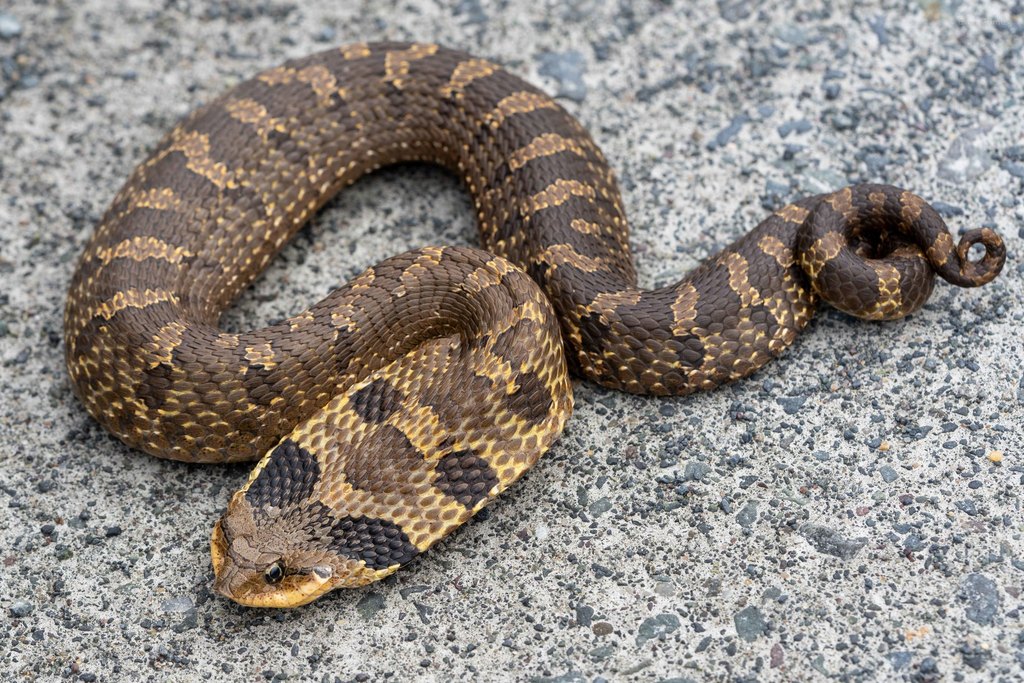
It is rear-fanged with a mild saliva that helps it subdue toads. Bites on people are rare and usually minor, but some people react to a chewing bite, so we handle calmly and never hand-feed.
Why did it flatten its neck and then play dead?
That is its whole bluff routine. It hisses and spreads a hood, and if that fails it rolls over with its mouth open. It is theatre, not illness.
Is it hard to feed?
It can be. In the wild they eat toads, so some youngsters need their rodents scented before they take them. Buy one that is already eating unscented food if you can.
How big does it get and does it dig?
Usually under a metre, and yes, it digs constantly with that upturned snout. Give it deep loose substrate to burrow in.
https://keepr.pet/husbandry/en/heterodon-platirhinos
Others in this group
What this sheet states
This sheet states 6 of 7 of the fields this product runs on. What is missing turns something off: day/night engine and awake count on the globe. We show the gap rather than fill it with a plausible number.
UVB is measured but does not count: it is absent from 420 of 678 sheets, and on most of them that is not a gap, since a nocturnal snake's sheet has no reason to state a UV index. Counting it would call the library incomplete without cause.