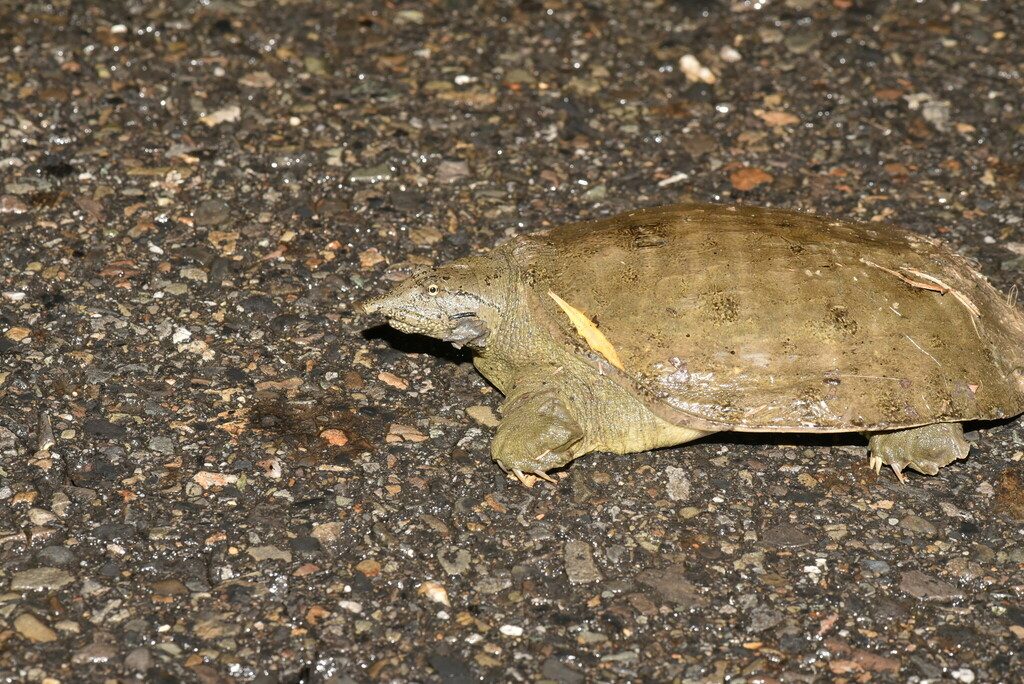
Can I keep it?
Setup
The numbers
Thermal gradient
A real gradient, 30–35°C warm against 24–29°C cool, so the animal chooses. The sheet states no separate night figure.
Why
Same scale on every sheet here, so two species compare by eye.
The sheet stateswarm 30-35 °C / cool 24-29 °C
UVB
The sheet statesrequire UVB lighting to survive
Traceable. The figures above appear in the page we cite, which we opened on 10 Aug 2026. That means you can check them, not that we have confirmed they are right. turtlecreek.ie
Drag the sun. Chinese softshell turtle is Nocturnal, so what it is doing changes with the light.
Enclosure and conditions
What your climate adds
This sheet states a range to hold. Your local climate decides how much work holding it is. Pick the nearest city: nothing is sent anywhere, the choice stays in this browser.
What it needs
Every line above is deduced from a value this sheet states, and names which one. Nothing here is a general recommendation. What the sheet does not state is listed too, rather than left out: a kit that looks complete is worse than one that names its gap.
Daily life
Behaviour and handling
Health
When to see a vet
Soft shell = fine sand + spotless water only. Carnivorous, messy — over-filter. Bites; low handling.
The species
Identity
Reproduction
Good to know
- The leathery shell and snorkel-like nose let it 'breathe' while buried in sand.
National law is not global, and we hold no national wildlife law for any country, Thailand included. Check your own authority before buying or selling.
Questions & sources
Common questions
Does it bite?
Yes, hard, and the neck is long and fast. This is not a turtle for handling.
Why is the shell soft?
It is leathery rather than hard, which is great for burying in sand but damages easily, so no sharp decor in the tank.
What does the tank need?
Water deep enough to swim, a soft sand bottom to bury in, strong filtration and an easy spot to reach the surface.
How big does it get?
Around 25 to 30 cm, sometimes more, which is bigger than most people expect.
https://keepr.pet/husbandry/en/pelodiscus-sinensis
Others in this group
What this sheet states
This sheet states 6 of 7 of the fields this product runs on. What is missing turns something off: humidity instrument and audit. We show the gap rather than fill it with a plausible number.
UVB is measured but does not count: it is absent from 420 of 678 sheets, and on most of them that is not a gap, since a nocturnal snake's sheet has no reason to state a UV index. Counting it would call the library incomplete without cause.