Setup
The numbers
Temperature
The cool side, 29°C. This sheet states the cool side only. It gives no warm side or basking figure, so the hot end is not in our data. Same scale on every sheet here, so two species compare by eye.
The sheet statescool 29 °C
Humidity
The sheet states60-80% with moist substrate and ventilation
Traceable. The figures above appear in the page we cite, which we opened on 10 Aug 2026. That means you can check them, not that we have confirmed they are right. reptilesmagazine.com
Enclosure and conditions
What your climate adds
This sheet states a range to hold. Your local climate decides how much work holding it is. Pick the nearest city: nothing is sent anywhere, the choice stays in this browser.
What it needs
Every line above is deduced from a value this sheet states, and names which one. Nothing here is a general recommendation. What the sheet does not state is listed too, rather than left out: a kit that looks complete is worse than one that names its gap.
The species
CITES II is a global listing and holds in every country. National law is not global, and we hold no national wildlife law for any country, Thailand included. Check your own authority before buying or selling.
Questions & sources
Common questions
Why is it expensive?
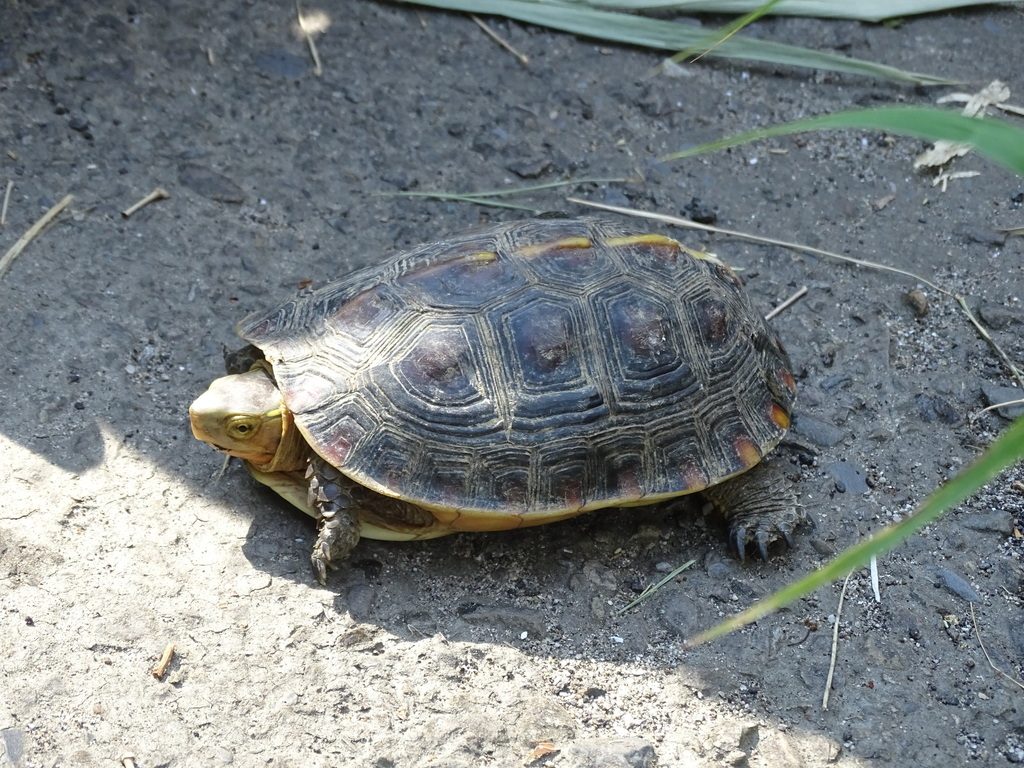
It is heavily collected across Asia, CITES listed and slow to breed, so legal captive-bred stock is limited.
Does it live in water?
Mostly on land. It needs a planted land enclosure with damp substrate and a shallow water dish, not an aquarium.
How long does it live?
Several decades, commonly thirty years and beyond.
What does it eat?
An omnivore: worms, snails, insects, fruit and greens, and it hunts on land.
https://keepr.pet/husbandry/en/cuora-flavomarginata
Others in this group
What this sheet states
This sheet states 6 of 7 of the fields this product runs on. What is missing turns something off: day/night engine and awake count on the globe. We show the gap rather than fill it with a plausible number.
UVB is measured but does not count: it is absent from 420 of 678 sheets, and on most of them that is not a gap, since a nocturnal snake's sheet has no reason to state a UV index. Counting it would call the library incomplete without cause.