KeeprHusbandry You're a Pro? Click here to meet Rex
Atlas / Library / Scincidae / Monkey-tailed Skink
CITES II
Scincidae

Monkey-tailed Skink

Corucia zebrata

Traceable. The figures above appear in the page we cite, which we opened on 10 Aug 2026. That means you can check them, not that we have confirmed they are right. reptile.guide

Photograph: alves.v.s · CC BY-SA

14:00
Day

Drag the sun. The sheet states a night temperature, so the rail follows it.

Arboreal · warm · humidFrom the sheet: warm end 32–38°C, humidity 70–90%

The way of life is written in this sheet, word for word. The climate words summarise the two figures above them, they do not add to them.

CITES II is a global listing and holds in every country. National law is not global, and we hold no national wildlife law for any country, Thailand included. Check your own authority before buying or selling.

Back to the globe My keep

https://keepr.pet/husbandry/en/corucia-zebrata

‹ All husbandry guides
warm end32–38 °C
cool end24–27 °C
Humidity70–90 %
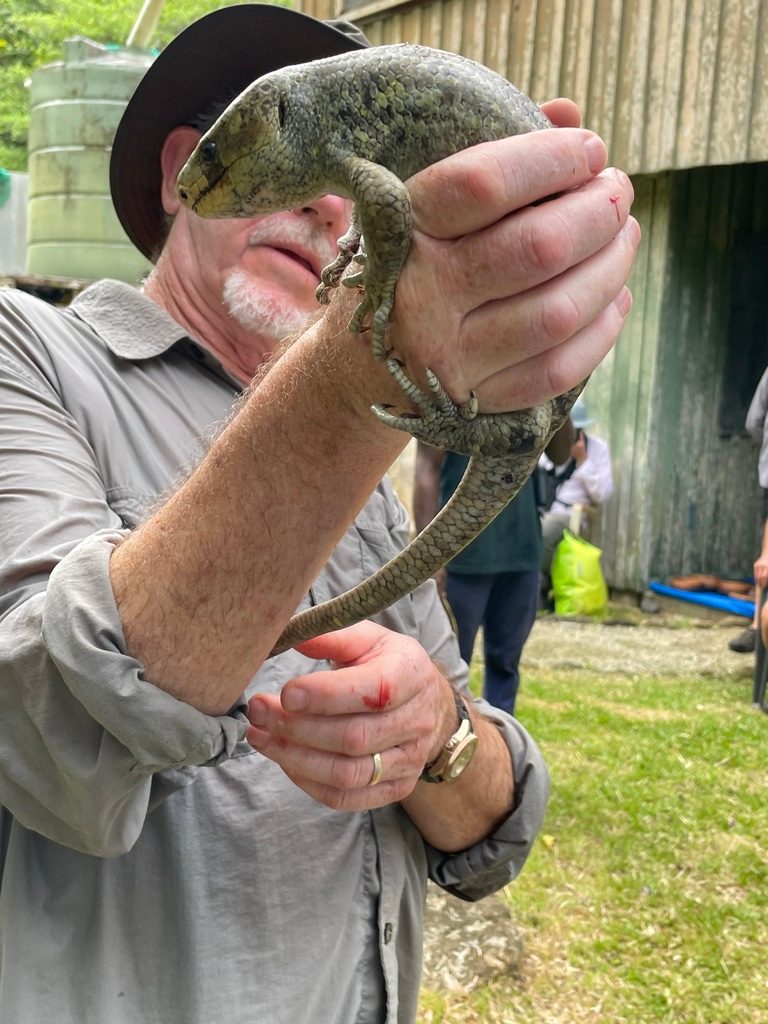
Monkey-tailed Skink (Corucia zebrata), photographed in the wild
Photograph · garywwilson · CC BY

Photographed by an observer on iNaturalist and published under a Creative Commons licence; the photographer and the licence are named under the image. It is not an animal of ours, and no animal was handled by us to produce it.

The numbers

Thermal gradient

152025303540 °C
24–27°Cool side
32–38°Warm side
24°Night

Day: a real gradient, 32–38°C warm against 24–27°C cool, so the animal chooses. Night: 24°C.

Why

Same scale on every sheet here, so two species compare by eye.

The sheet stateswarm 32-38 °C / cool 24-27 °C / night 24 °C

Humidity

70–90%Target RH

The sheet states70-90 % en permanence

UVB

Requiredrequired

The sheet statesrequire a full lighting spectrum, with particular attention to UVB light

Enclosure
For a single specimen, an enclosure that's five feet high, three feet wide, and six feet long
Diet
vegetation, including leaves, flowers, shoots, roots, and fruits; fruit around twice a week

Identity

Enclosure and conditions

Temperature
warm 32–38 °C / cool 24–27 °C / night 24 °C

What your climate adds

This sheet states a range to hold. Your local climate decides how much work holding it is. Pick the nearest city: nothing is sent anywhere, the choice stays in this browser.

Common questions

Is it dangerous?

The bite is the serious one among skinks. Strong jaws and a defensive adult can leave a nasty wound.

What does it eat?

Leaves and vegetables only. It is a herbivore, which surprises almost everyone who asks.

How long does it live?

20 to 25 years or more, and they produce only one large baby at a time. That is why the price is high.

Can I keep two together?

Family groups exist in the wild, but introducing strangers goes badly. Do not mix animals casually.

What it needs

A heat sourcebecause tempwarm 32-38 °C / cool 24-27 °C / night 24 °C
A thermostat to regulate itbecause tempwarm 32-38 °C / cool 24-27 °C / night 24 °C
A thermometerbecause tempwarm 32-38 °C / cool 24-27 °C / night 24 °C
A way to check the night figurebecause tempwarm 32-38 °C / cool 24-27 °C / night 24 °C
A hygrometerbecause humidity70-90 % en permanence
UVB, stated as requiredbecause uvbrequire a full lighting spectrum, with particular attention to UVB light
Not stated: The size of the enclosurethis sheet describes the enclosure without a figure: « For a single specimen, an enclosure that's five feet high, three feet wide, and »

Every line above is deduced from a value this sheet states, and names which one. Nothing here is a general recommendation. What the sheet does not state is listed too, rather than left out: a kit that looks complete is worse than one that names its gap.

Sources

Others in this group

What this sheet states

62%
TemperatureHumidityEnclosure sizeActivityOriginDietSourcesUVB

This sheet states 4 of 7 of the fields this product runs on. What is missing turns something off: enclosure size audit, day/night engine and awake count on the globe, the diet section. We show the gap rather than fill it with a plausible number.

UVB is measured but does not count: it is absent from 421 of 678 sheets, and on most of them that is not a gap, since a nocturnal snake's sheet has no reason to state a UV index. Counting it would call the library incomplete without cause.