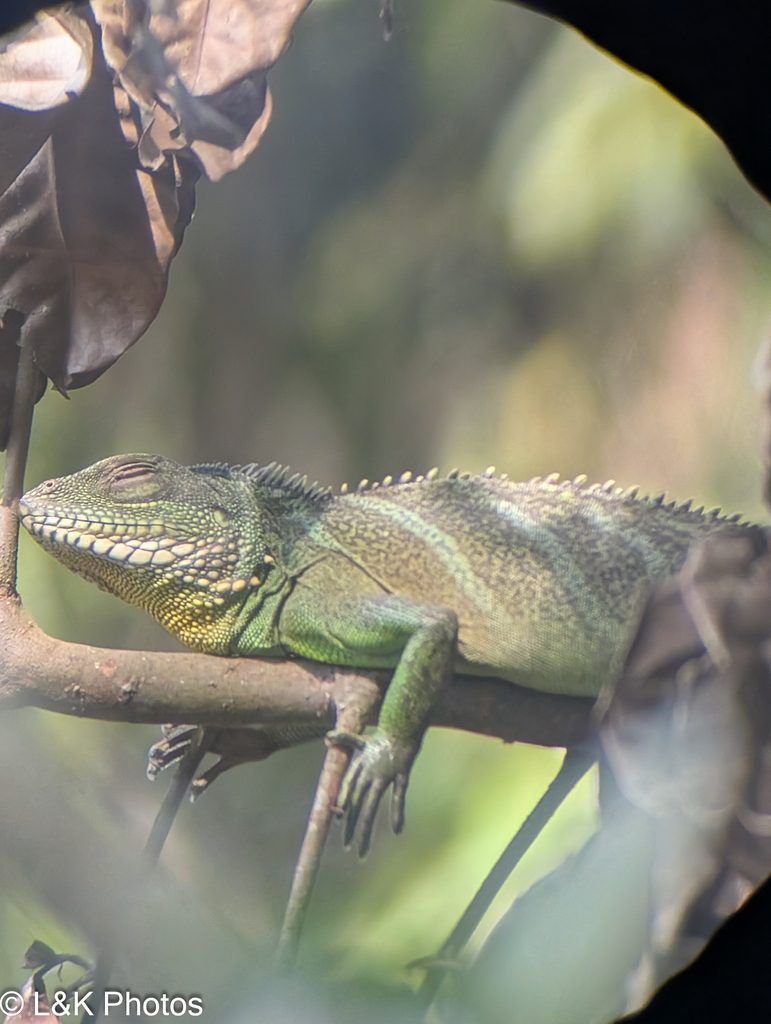
Setup
The numbers
Thermal gradient
Day: a real gradient, 32–35°C warm against 25–30°C cool, so the animal chooses. Night: 24–25°C.
Why
Same scale on every sheet here, so two species compare by eye.
The sheet stateswarm 32-35 °C / cool 25-30 °C / night 24-25 °C
Humidity
The sheet states60-80%
UVB
The sheet statesone Arcadia T5 HO Desert 12% or Zoo Med T5 HO ReptiSun 10.0; UVB mounted over mesh: dragon's back is 12-15" / 30-38cm below UVB lamp; UVB mounted under mesh: dragon's back is 16-18" / 40-46cm below UVB lamp; UVI of around 3.0 – 4.0 in the basking area
Traceable. The figures above appear in the page we cite, which we opened on 10 Aug 2026. That means you can check them, not that we have confirmed they are right. reptifiles.com
Drag the sun. The sheet states a night temperature, so the rail follows it.
Enclosure and conditions
Enclosure
Drawn from the stated numbers. Only what the sheet states is drawn inside.
Why
The rectangle carries the exact width-to-height ratio of the figures above it, and the ruler under it places that width on the 0–250 cm scale every sheet here shares, so two species still compare at a glance. Nothing is added that the sheet does not name: a lamp drawn on a sheet that never mentions one would be invented equipment. What the sheet leaves out is listed rather than left blank, because an empty tank reads as « none needed ».
The sheet states6'L x 3'W x 6'H
What your climate adds
This sheet states a range to hold. Your local climate decides how much work holding it is. Pick the nearest city: nothing is sent anywhere, the choice stays in this browser.
What it needs
Every line above is deduced from a value this sheet states, and names which one. Nothing here is a general recommendation.
Food
Diet
Feeding rhythm
Twenty-eight days, one row. Each band is a meal window. This sheet states a figure for each age, so each age has its row.
Why
The windows widen as they go because the interval is a range: four meals after a 10–14 day cycle land anywhere between day 40 and day 56. A young animal's row is drawn only where the sheet gives one: working it out by dividing the adult interval would be inventing a ration.
The sheet statesHatchlings (<3 months old) — Insects daily; Juveniles (<16" long) — Insects and salad every other day; Subadults and adults (>16" long) — Insects every 3-5 days, salad daily; crickets, discoid roaches, dubia roaches, earthworms, grasshoppers, hornworms, silkworms, superworms, snails
The species
Identity
CITES II is a global listing and holds in every country. National law is not global, and we hold no national wildlife law for any country, Thailand included. Check your own authority before buying or selling.
Questions & sources
Common questions
How big does it get?
Around 90 centimetres including the long tail. The tank most people buy first is far too small.
Can I handle it?
Yes with regular handling, but nervous ones rub their snouts raw on glass, so plan visual cover from day one.
What does it eat?
Insects mainly, plus some greens and the occasional fish. A good, reliable appetite.
Can I keep two together?
One male only. Two males fight, and even a pair needs space and separate basking options.
https://keepr.pet/husbandry/en/physignathus-cocincinus
Others in this group
What this sheet states
This sheet states 6 of 7 of the fields this product runs on. What is missing turns something off: day/night engine and awake count on the globe. We show the gap rather than fill it with a plausible number.
UVB is measured but does not count: it is absent from 420 of 678 sheets, and on most of them that is not a gap, since a nocturnal snake's sheet has no reason to state a UV index. Counting it would call the library incomplete without cause.